| |
|
VLF
Electromagnetic receiver |
If you are looking for any of the following,
there's an excellent
chance that the TOTEM-2A will solve your problem:
Sulphide Ore bodies
Buried hazardous waste
New source of groundwater
Cavities in a karst formation
Long forgotten pipes and cables, etc.
Airborne VLF measurements are now commonly performed
as part of multiparameter airborne geophysical surveys.
|
TOTEM-2A has three orthogonally mounted coils which
measure the total field strength and the vertical quadrature component of the magnetic VLF
field. No external correction is required for aircraft pitch, roll, and
yaw. This VLF
method does not require its own transmitter, and thus becomes the fastest and the least
expensive EM technique. VLF
sensors can be installed on a wing tip, nose stinger, tail stinger, lower helicopter
frame, or a towed bird. |
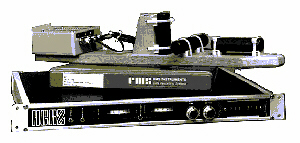
TOTEM-2A Console and Sensor/Preamplifier Assembly
|
The addition of the TOTEM-2A in your airborne
geophysical packages only marginally increases the survey cost, yet the data have
demonstrated the usefulness of this technique in geological mapping.
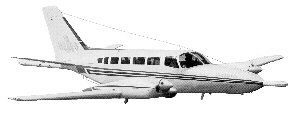
Nose-stinger installation of TOTEM-2A
receivers
-
Receives the magnetic components of fields radiated
from VLF transmitters in the 15-25 kHz frequency range. These transmitters are located
around the world for navigation and communication with submarines. Because of its
simplicity, size and ease of operation, this VLF system is a cost effective addition to
existing and new airborne geophysical exploration systems.
-
VLF data complements airborne magnetic data.
-
Airborne VLF EM data are mainly used for geological
mapping, interpretation of large scale geological features, such as faults in conducting
rock. Also, under favourable circumstances smaller conductors may be
revealed, locating
new sources of groundwater and buried hazardous waste, etc.
|
|
![getacro[1].gif (712 bytes)](../getacro[1].gif)


